
What Actually Happens to Your Nervous System During a Reiki Session?
When people ask what I'm doing when I work on someone, there are two true answers. What I feel happening - the warmth, the current and sensations in my hands, the sense of meeting something in the person on the table. And what the research is beginning to document. I've never experienced these as separate things. They're different resolutions of the same image.
The system we're working with
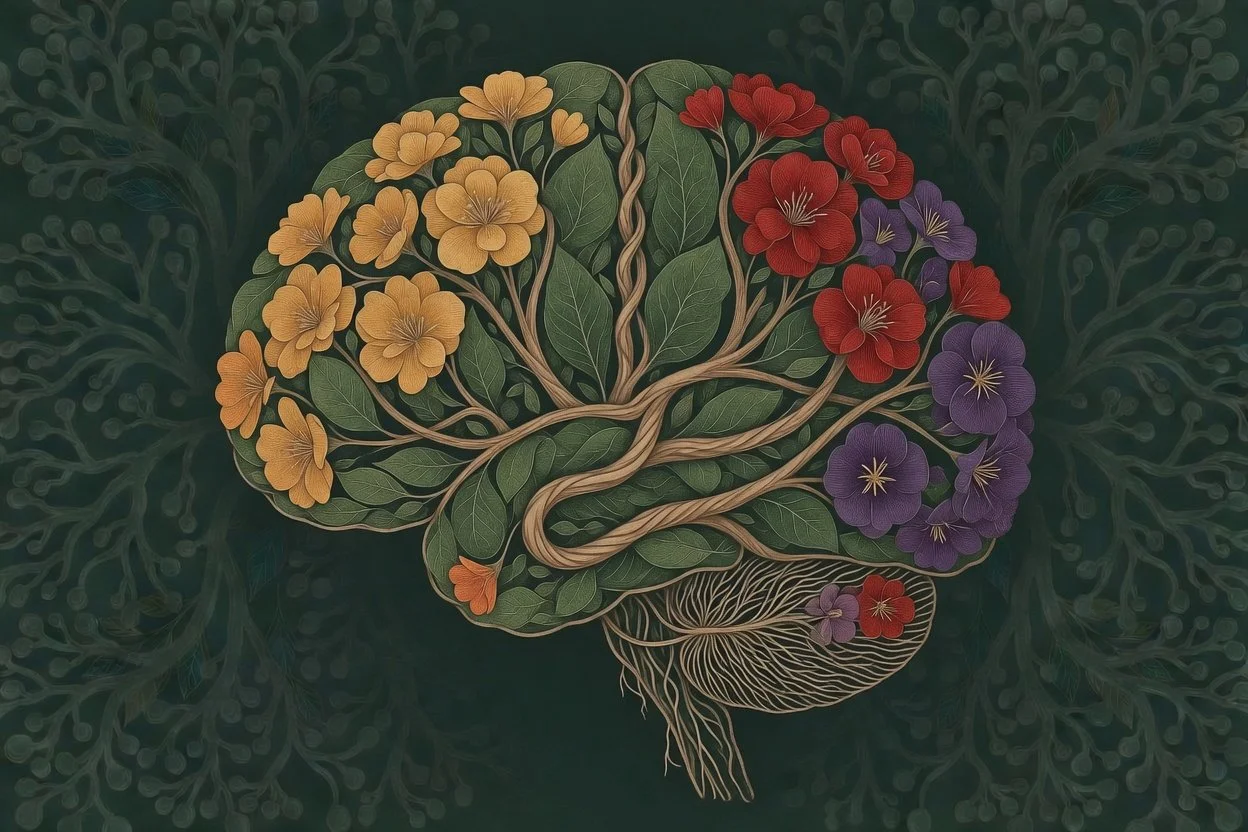
The autonomic nervous system governs everything that runs without deliberate control: heart rate, digestion, immune activity, hormonal cascades. Its two branches operate in rough opposition. The sympathetic system mobilizes for threat - cortisol, adrenaline, blood diverted to the muscles, digestion suspended. The parasympathetic system governs recovery - heart rate dropping, blood pressure easing, immune function restored, tissue repair underway.
① Sympathetic
Designed for acute threat. The difficulty is that the nervous system doesn't reliably distinguish between a predator and a deadline. Chronic activation, which describes most of my clients when they first arrive, carries a real physiological cost.
② Parasympathetic
Where the body does its restorative work. Most people I see have been so thoroughly sympathetically dominant for so long that dropping into this state can feel unfamiliar.
This shift is what research has been most equipped to measure.
What the research shows
Heart rate variability
HRV, the beat-to-beat variation in heart rate, is one of the more sensitive indices of autonomic balance we have. A rigid, low-variability pattern reflects a system locked in sympathetic dominance; high variability reflects a system that can flex, respond, and recover. Multiple studies have documented significant HRV increases during and after Reiki sessions. This is an objective measure of nervous system state, not self-report.
The hospital studies
The most methodologically rigorous Reiki research has emerged from clinical settings - oncology units, pre-surgical suites - where outcomes are measurable and controls are tighter. These trials have documented reductions in anxiety, pain perception, and blood pressure relative to control groups. Because of this, many hospital systems have integrated Reiki into their care programs on that basis.
Cortisol
Sustained cortisol elevation disrupts and degrades sleep, impairs hippocampal function, promotes systemic inflammation, and suppresses cellular immunity. Pilot studies measuring salivary cortisol pre- and post-Reiki have found meaningful reductions.
Blood pressure and heart rate
Both decrease, reliably, across studies. These are hard endpoints. They don't bend to expectation.
Anxiety - Large, statistically significant reduction across 13 randomized controlled trials and 824 participants
Blood pressure + heart rate - Both fell significantly vs. sham and no-treatment controls
Nervous system flexibility - Heart rate variability significantly higher after Reiki than placebo in healthcare professionals with burnout
One mechanism science has mapped: touch
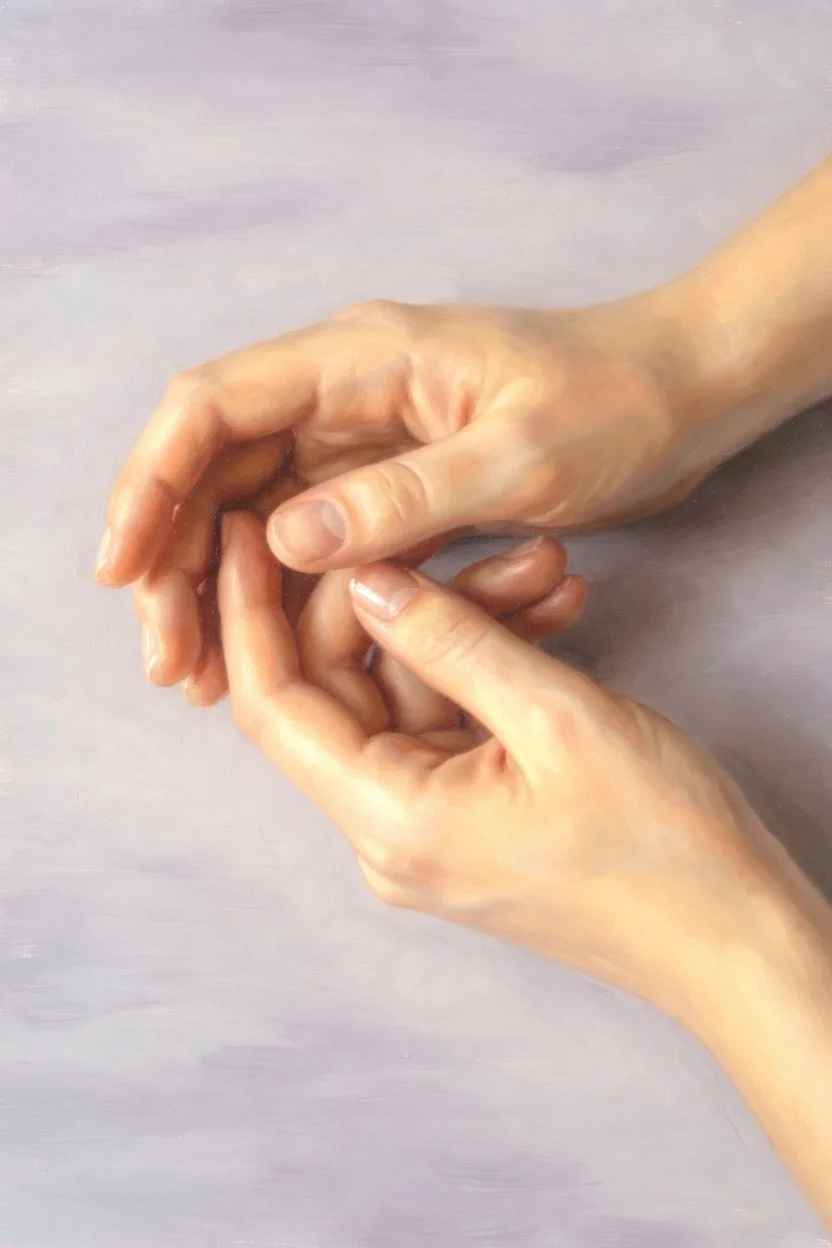
The skin contains a specific class of nerve fibers that respond to slow, warm, gentle contact - the kind that happens at body temperature, unhurried, with full attention. Not pressure, not quick movement. This quality of touch used in Reiki, exactly. When these fibers are activated, they send signals deep into the brain and trigger the release of oxytocin.
Oxytocin is usually described as a bonding hormone, which is true but undersells it. It also quiets the brain's alarm center, brings stress hormones down, raises the threshold at which the body registers pain, and shifts the whole system toward a state of physiological safety. What's notable is that the pace and quality of touch in Reiki, slow, sustained, warm, intentional, is exactly what these nerve fibers were designed to respond to.
Presence is not ambient. Clients frequently distinguish between sessions where practitioners are fully present and sessions where their attention has drifted, even when the hand positions are identical. I believe they're detecting something real. The nervous system is a remarkably sensitive instrument for reading the quality of another person's attention - it evolved in social contexts where that information mattered. A practitioner's internal state is an input, not a backdrop.
What strikes me is that Reiki's traditional form - the deliberate pace, the sustained hand positions, the cultivated quality of presence - describes almost exactly what this pathway needs to activate. But touch is one channel among several. It doesn't explain distance sessions. It doesn't explain what I perceive before my hands make contact, or the specificity of what clients report when I work on areas I haven't announced. These aren't fringe cases. They're ordinary features of the practice that a touch-based account leaves unaddressed.
Brainwave shifts and the relaxation response
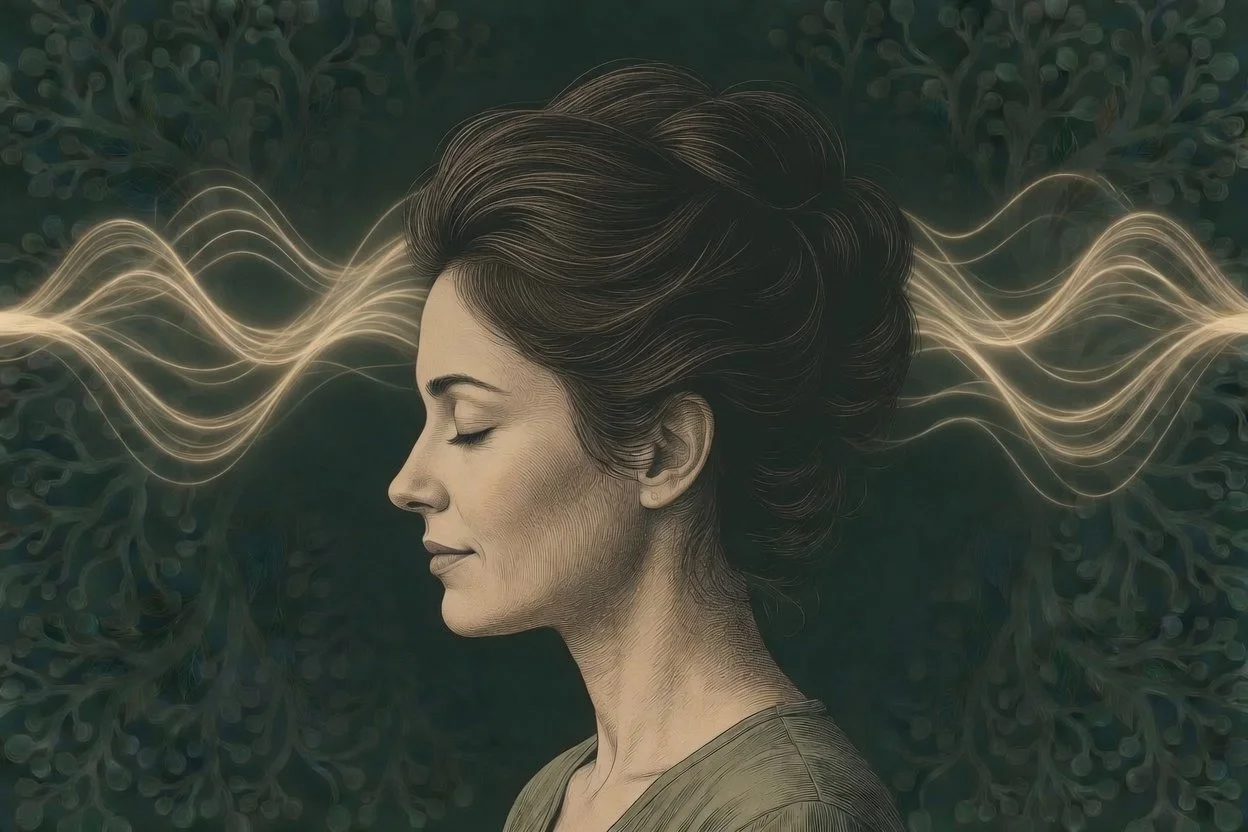
Herbert Benson's relaxation response framework describes a coordinated physiological state - metabolic rate declining, respiratory rate slowing, blood pressure falling, skeletal muscle tension releasing - that can be deliberately induced and is measurably distinct from ordinary rest. EEG studies of Reiki recipients have recorded the brainwave signature associated with this state: increased alpha and theta power, decreased beta.
The relaxation response, physiologically
Reduced oxygen consumption and metabolic rate
Decreased heart rate and blood pressure
Release of chronic muscular tension
Brainwave activity shifting toward alpha and theta
The brain's background chatter quiets - the mental loop of self-referential thought, worry, and mind-wandering that runs by default when nothing is demanding your attention
Alpha is the signature of calm, open awareness - present but not effortful. Theta sits at the edge of sleep, where somatic processing and emotional integration tend to occur without conscious direction. When clients describe arriving somewhere without quite knowing how - clear, a sense of being out of their body, not asleep - they're describing theta. It's a state most adults rarely access. In a well-held session it often arrives within twenty minutes.
Pain and the brain's interpretation of it
Pain is not a reliable signal of tissue state. It's a prediction - the brain's best current model of threat to the body, constructed from inputs, context, prior experience, and current state. Fear reliably amplifies it; perceived safety reduces it. Gate control theory describes one of the reasons why: the brain can actually send signals back down the spinal cord to turn down the volume of incoming pain before it fully registers. And the conditions that allow it to do that… a calm nervous system, low stress hormones, a felt sense of safety, are exactly what Reiki tends to produce.
I've worked with clients who arrived reporting pain at a seven and left at a two. Nothing in their tissue changed in sixty minutes. What changed was the nervous system's orientation toward threat, and with it, how loudly that signal was being broadcast. This is consistent with what the oncology and post-surgical literature shows. Pain reduction in Reiki isn't an artifact of distraction. It's the predictable result of shifting the system that constructs pain.
Ki, and the limits of current measurement
Ki isn’t, for me, a conceptual framework I've adopted to describe something else. It's what I experience working - a warmth and movement that is palpable, directional, and informative. I follow it. It tells me where to stay and when to move, and the correlation with what clients report, session after session over years, is not something I'm able to attribute to pure coincidence.
Controlled studies attempting to detect a practitioner-emitted energy field using conventional instruments have not yielded consistent positive results. I find this unsurprising rather than troubling. The history of science is littered with phenomena that were clinically real and operationally useful long before anyone built an instrument capable of detecting them. What instruments can measure is a function of what instruments were designed to detect, not a boundary on what exists. The body generates and responds to electromagnetic fields, biophoton emissions, and electric signals from connective tissue, none of which were visible to researchers a century ago.
On placebo: The placebo response involves endogenous opioid release, measurable immune modulation, and structural changes in neural circuitry. If Reiki reliably activates it, that is a meaningful biological effect, not a consolation. What I'm less interested in is using placebo as a ceiling, especially considering Reiki significantly outperforms placebo when studied. Whether ki constitutes something that current methodology hasn't yet been able to isolate is a question I think deserves genuine scientific curiosity.
Where the effect is clearest
The conditions where my clients seem to benefit most obviously are largely similar to the ones the research keeps returning to - states where a chronically stressed nervous system is getting in the body's way:
Where clinical evidence is most consistent:
Anxiety - the most replicated finding in the Reiki literature
Cancer-related distress: fatigue, pain, nausea, and anxiety during treatment
Chronic pain, particularly fibromyalgia and central sensitization conditions
Post-surgical recovery - pain and anxiety in the acute phase
Sleep dysfunction with stress-based etiology
Burnout - prolonged allostatic overload that the system cannot self-correct
Two descriptions, one thing
The physiological account and the energetic account are not in competition. They're operating at different levels of description, the way a piece of music can be accurately described in terms of air pressure waves and equally accurately described in terms of harmony and how it makes you feel. Neither cancels the other. Neither is complete on its own.
What the research gives me is language that opens the practice of Reiki to people who wouldn't otherwise consider it. What Reiki gives me is direct access to something the research is still learning to see. I'm passionate about, and interested in both, and as far as I can tell, they’re describing facets of the same thing.