
There Is No Way to Happiness. Happiness Is the Way.
Before we can talk about what this means, we have to talk about what we've been taught happiness is.
Not what we'd say if someone asked. We've all read enough to give a decent answer about presence and gratitude and not chasing things. We know the language. But underneath the language, in the place where we actually operate, most of us carry a happiness that is conditional, distant, and shaped distinctly like a reward. It is the thing that will arrive when the conditions are finally right. When we are finally, finally, done becoming and can just be.
This belief does not feel like a belief. It feels like common sense. Of course you'll feel better when things are better. Of course the difficulty is the problem. You'd have to be indifferent or delusional to feel at peace in the middle of genuine hardship.
But that framing, "of course," is exactly where the trap is.
Thich Nhat Hanh said there is no way to happiness, happiness is the way. Most people receive this as encouragement. Be happy now! Enjoy the journey! It sounds like a gentle nudge toward positivity, and so it slides off, and nothing changes.
But I think the statement is not gentle at all. I think it’s a description of something structural, something about the nature of time and mind and how we've learned to live inside both. And when you really take it in, it is not comforting. It’s at first almost unbearable.
Because what it means is this: if happiness is the way, then all the years you spent in the waiting room were not a temporary detour. They were your life. The time spent bracing for the thing to get better, holding your breath until the conditions improved, treating the present as a problem to be solved on the way to something livable, that was not the pause before your life began. That was your life, and it was happening to you while you were elsewhere.
That is not a small thing to sit with.
There is a particular quality of grief that arrives when you start to understand this. It isn't the grief of loss exactly. It's more like the grief of recognition, of realizing you've been given something you weren't opening. The morning light kept arriving. The food was warm, the body was breathing, and some part of you was always a few steps into the future, managing the gap between now and when things would be okay enough to really feel.
Most people, when they encounter this recognition, want to immediately convert it into a plan. Okay, I understand now, so I'll be present going forward. I'll do the practice. I'll catch myself when I drift. They want to use the insight to fix the future, which is, of course, the same move that caused the problem. The same orientation, just now applied to the goal of presence.
The teaching keeps asking us to stop one layer deeper than we've stopped before.
What does it mean for happiness to be the way? Not the destination, not the reward, not the feeling that arrives when enough things go right, but the way itself?
I think it means something almost impossibly simple, which is why it takes so long to understand. It means that the quality of your attention is not a byproduct of your circumstances. It means that how you are here, in this moment, with this life, with these unresolved and possibly unresolvable tensions, is not determined by those tensions. It is chosen, or more precisely, it is practiced. Again and again and again (and again.)
Not chosen in the sense of a decision made once and then held. Chosen in the sense of a direction you turn back to, constantly, the way a plant turns toward light without drama, without announcing it, without needing to understand why light matters. The turning is the thing. The practice is the turning.
Here is what I notice in people who are actually living this, not just talking about it.
They are not particularly serene. They are not above difficulty. They don't have fewer problems or fewer losses or fewer days when the weight of being a person in a complicated world becomes almost too much. What's different is something harder to name. There is less insistence that things be other than they are before they can be engaged with. There is a willingness to be in the room with what is actually in the room, not just waiting for the room to change.
This is not detachment. Detachment is a strategy, a way of managing contact with life by reducing the surface area of that contact. This is the opposite. It's more contact, not less. More willingness to let what is actually happening land, to be moved by it, to be changed by it, without requiring it to be different as a condition of your presence.
The Zen tradition calls this quality "beginner's mind." In somatic and energy work, it shows up as the difference between a body that is braced and a body that is open. The braced body is waiting for the threat to pass. The open body is actually here, permeable, responsive, capable of receiving what the moment is offering and releasing what the moment is not.
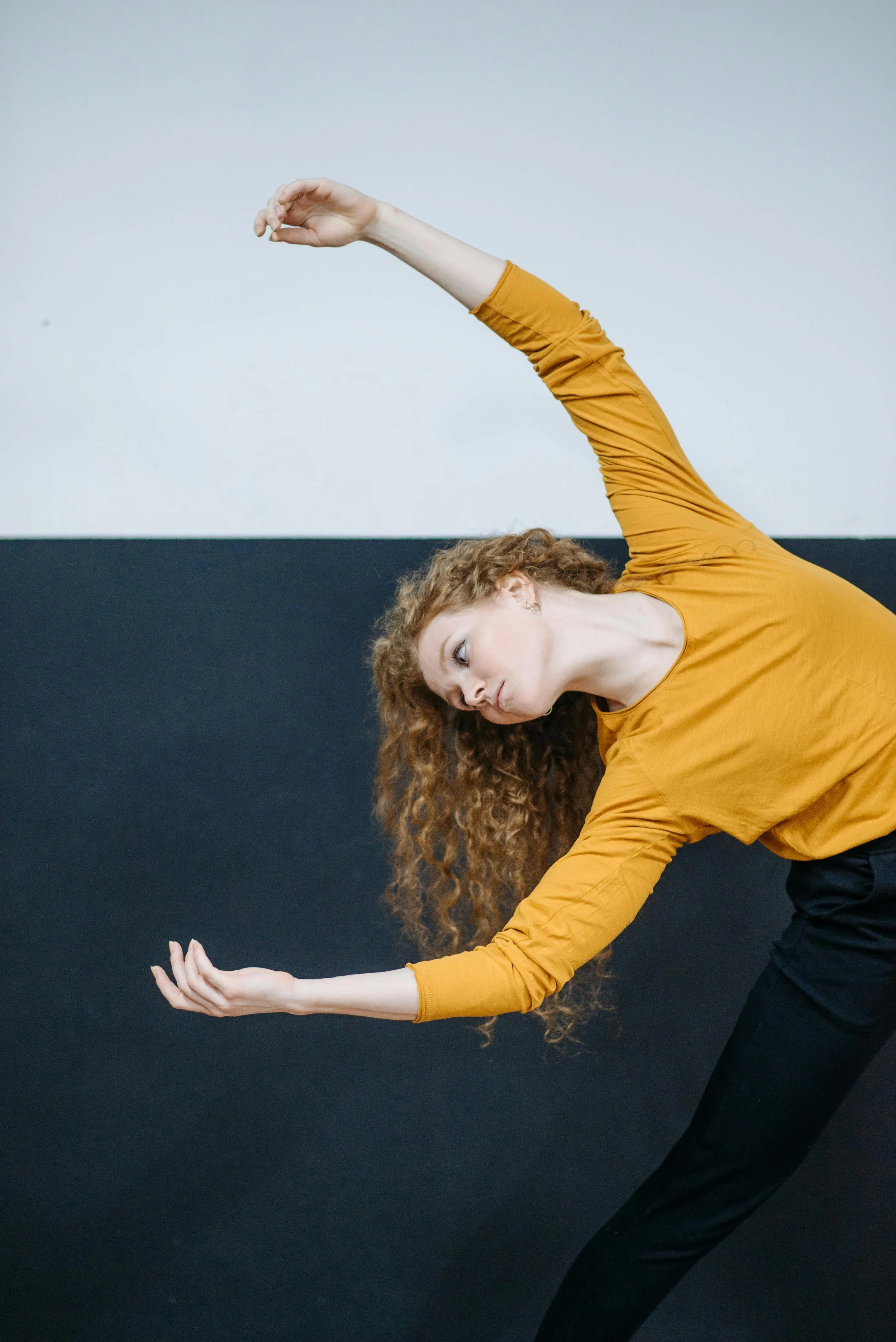
You can feel the difference in your own chest right now, if you pay attention. The slight holding. The subtle forward lean toward what comes next. The almost imperceptible tension of a self that is not quite here yet, still in transit to somewhere it believes will be better.
What the teaching is pointing at is not an achievement. That's the most important thing to understand, and also the hardest, because we have been trained our entire lives to turn insights into achievements, to learn a thing and then have it, to understand and then be done with the understanding.
Happiness as the way is not a state you arrive at. It is a practice that has no completion. Every moment is another opportunity to be in it or to be somewhere else. Every ordinary Tuesday is either Tuesday, with its particular quality of light and whatever you are feeling and whoever is in your life, or it is the hallway between last week and next week, a space to be gotten through.
You will spend your whole life moving between these two ways of being. The practice is just noticing which one you're in, and returning.
The returning is not a failure. This is crucial. We tend to measure progress by how rarely we lose presence, and then feel defeated when we lose it constantly, which we will, for as long as we are human beings with minds that move through time. But the loss of presence is not the obstacle to the practice. It is the practice. The coming back, again and again, without self-criticism, without deciding it means you've failed to understand something, is the practice. Each return is not evidence of how far you've drifted. It is the thing itself. It is happiness as the way.
There is something in this teaching that touches the deepest layer of what most spiritual practice is actually for, and it is this: at the center of the conditional approach to happiness is a belief, rarely articulated, that you are not safe here. That the present moment is not a place where you can afford to fully land, because if you land here and things are as hard as they seem, you’ll be overwhelmed and unable to function. So you stay in motion. You stay just slightly ahead of your own life, trying to shape it into something you can finally relax into.
But the relaxing never comes that way, because the problem isn't the circumstances. The circumstances are just circumstances. The problem is the belief that you can only be okay once they're different. That belief is not based on evidence. It is based on fear, and fear is not an oracle. Fear is a protector that likes to overstay its welcome.
To practice happiness as the way is to keep gently, almost stubbornly, returning to this: you are here. The here is allowed to be what it is. And you are allowed to be a person who is actually inside their life while it’s happening.
This is not the same as saying everything is fine. It is not spiritual bypassing or forced optimism or the flattening of real pain into a lesson. Genuine suffering is genuine. Loss is real. Injustice is real. The teaching doesn't ask you to pretend otherwise.
It asks something stranger and more demanding than that. It asks whether, inside the genuine difficulty, inside the loss and the uncertainty and the ordinary Tuesday, there is still a quality of presence that is available to you. Whether you can be with the difficulty rather than just trying to get past it. Whether the life you are living right now, exactly as it is, can be met rather than managed.
Most of us have to come to this the hard way. We have to exhaust the strategy of deferral, realize it has not delivered what it promised, and then stand in the wreckage of that realization long enough to start asking a different question.
The different question is not: how do I get to happiness?
It is: can I be, right now, in the only place happiness has ever actually lived?
The answer is always yes. Not always easily. But always yes.