
The Science & Soul of Reiki
What Is Reiki?
Reiki is a Japanese healing art that works with the body's natural life force energy. The word itself comes from two Japanese terms - rei, meaning universal or spiritual, and ki, meaning life force. Ki is the same concept as chi in Chinese medicine and prana in yogic tradition: the animating energy that flows through all living systems. When that flow is disrupted, stagnant, or unbalanced, the conditions for dis-ease are created. Reiki restores flow.
It is gentle and non-invasive. It is also something more - an invitation into a deeper relationship with yourself, with the intelligence of your own body, and with the larger energy that moves through all living things.
My practice is rooted in one belief: healing is not something done to you. It is something that happens within you. What I offer is energetic support - a way of helping you return to balance.
Where It Comes From
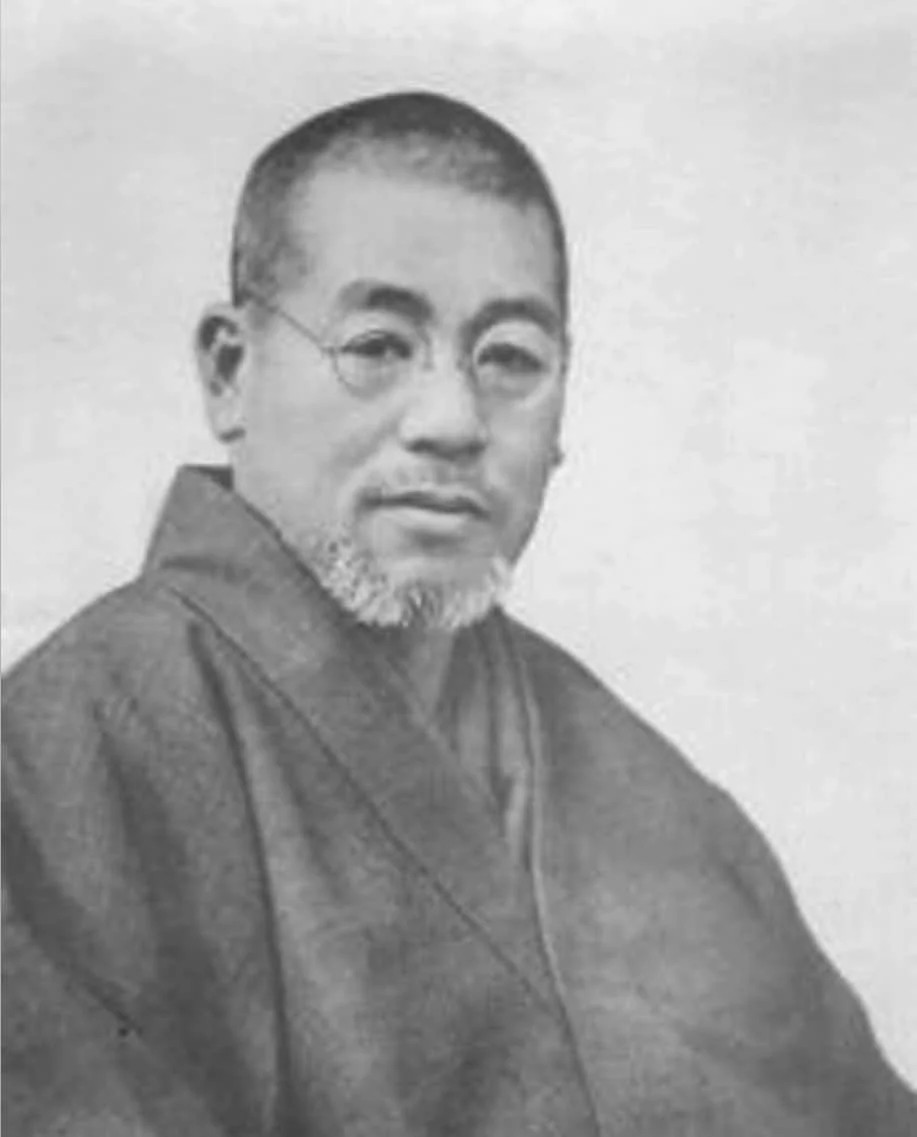
The story begins in the early twentieth century with a Japanese seeker named Mikao Usui. Educated in a Buddhist temple school, his training included Kiko - a Japanese practice similar to Qi Gong - as well as Shugendo, a tradition blending Buddhism, Daoism, Shinto, and shamanism. In 1922, he undertook a 21-day fast and meditation on Mount Kurama, a sacred mountain north of Kyoto. On the final day, he experienced what his memorial stone describes as a profound spiritual awakening. He did not invent a new wellness product. He received something.
From that point forward, his capacity to transmit healing energy was greatly enhanced - and crucially, the giving of it did not deplete him. He founded a healing society in Tokyo that same year and taught Reiki to over 2,000 people during his lifetime. When the devastating Kanto earthquake of 1923 destroyed much of the city, Usui and his students moved through the wreckage offering treatment to the wounded. The practice spread not through marketing, but through need.
I am a traditional Usui Reiki Master Teacher, trained in this lineage. His system was never solely about physical relief. From its very origins, it was a path of spiritual development, self-inquiry, and conscious living. That spirit is present in every session.
"The word healing is used in the sense of regaining harmony and wholeness. Usui Shiki Ryoho addresses the whole person on the physical, emotional, mental, and spiritual levels." - Usui Shiki Ryoho tradition
The Five Precepts
In the West, Reiki is sometimes reduced to a hands-on healing technique. This misses the most important part of what Usui taught. At the heart of the practice are the Gokai - five precepts drawn from older Buddhist teachings that Usui refined into his own language. These are not affirmations. They are daily disciplines of the spirit.
Just for today, I will not worry. Just for today, I will be peaceful. Just for today, I will give thanks for my many blessings. Just for today, I will do my work honestly. Just for today, I will be kind to every living thing.
The phrase "just for today" is significant. It anchors the practitioner in the present moment rather than the weight of accumulated habit or future anxiety. These are not ideals to achieve. They are an ongoing practice of returning, again and again, to a more conscious way of living.
How It Works
The body holds everything we have been through. Stress, grief, illness, loss - the accumulated weight of simply being human. It holds all of it, often long before that holding surfaces as a physical symptom. Working at the level of the energy field offers a way to meet those roots directly - not just what is happening in the body, but what is happening in the heart, the mind, and the spirit.
What most people notice first is how completely their body lets go. That is not incidental. It is central to how Reiki works.
A session directly engages the parasympathetic nervous system - the branch of the autonomic nervous system responsible for rest, digestion, and repair. Most of us spend far too much of our lives in sympathetic activation, the chronic stress response, and far too little time in the regulated, restorative state where real healing can occur. Reiki creates the neurological conditions for that shift. When the nervous system feels safe enough to settle, the body's own healing intelligence comes back online. Inflammation decreases. Cellular repair accelerates. The immune system re-engages. The body does what it was always designed to do, when given the chance to stop bracing long enough to remember.
And in that stillness, something else often opens too - a sense of presence, a release of something long held, a feeling of being held by something larger than the thinking mind.
What the Research Shows
For those who need science before they can permit themselves to rest, there is good news.
A comprehensive review of 13 placebo-controlled studies found that Reiki outperformed placebo for activating the parasympathetic nervous system, measured through reduced heart rate, reduced blood pressure, and increased heart rate variability. Eight of those studies showed Reiki performing significantly better than placebo - and two studies conducted with rats showed clear objective benefit, which argues against the results being purely psychological in origin.
Research has also demonstrated that Reiki increases alpha and theta brainwave activity - states associated with deep relaxation and meditative awareness. A 2022 systematic review found high-grade evidence that Reiki outperforms placebo for clinically significant levels of stress and depression, and moderate-to-high evidence for anxiety reduction. Independent research found that the autonomic nervous system responds measurably differently to genuine Reiki versus placebo Reiki, strongly suggesting a real physiological mechanism.
The scientific community has not yet reached consensus on exactly how it works. What is clear is that something is happening in the body during a Reiki session that is distinguishable from doing nothing - and that something aligns consistently with deep nervous system regulation.
What It Addresses
Traditional Usui Reiki addresses the whole person. Illness and imbalance do not exist in isolation. They ripple across all levels of the self.
Physical. Reiki supports the body's own healing processes. Evidence points to pain reduction, improved recovery times, and support for those undergoing treatment for serious illness. It reduces blood pressure and heart rate, eases chronic pain, and supports better sleep. It does not replace medicine. It works alongside it, restoring the conditions the body needs to do its own repair work.
Emotional. Emotion lives in the body before it ever reaches the mind. Reiki often surfaces old grief, unexpressed anger, or held fear that has been stored in the tissues for years. This is the beginning of real release. Many people describe a sense of having set something down that they did not know they were still carrying.
Spiritual. Reiki is not a religion and requires no particular belief system. However, it operates on a level that most people experience as deeply meaningful — a quieting of the inner critic, a feeling of being held, a sense of connection to something larger. Usui himself framed the practice as a path of spiritual refinement first, and a healing art second.
Energetic. I use the chakra system as a living map for understanding where energy may be stagnant, overactive, or dysregulated. Each of the primary chakras corresponds to major nerve plexuses and organ systems, and to the emotional, psychological, and spiritual patterns woven through them. It is an ancient framework — and a remarkably precise one — for navigating the terrain where body, mind, and soul meet. Healing on any one of those levels tends to ripple through the others.
A Few Things Worth Saying Plainly
Reiki is not a cure. It does not diagnose, and a practitioner working with integrity will never suggest otherwise. It is a support system for the whole self - not a replacement for medical care.
Traditional Usui Reiki is passed through a lineage via attunements, a process through which the practitioner's capacity to channel healing energy is opened and deepened. This lineage matters. When you seek a practitioner, I encourage you to ask about their training, their teacher, and whether they can trace their lineage back to Usui Sensei. The integrity of the transmission is part of what makes the practice what it is.
What It Really Is
Reiki works precisely by getting out of the body's way - by creating the conditions of safety, stillness, and energetic coherence that allow the body and spirit to do what they have always known how to do.
What it really is, underneath everything: it is a practice of returning. To the body. To the breath. To the present moment. To the quiet intelligence that has been trying, all along, to bring you home.
What to Expect in a Session
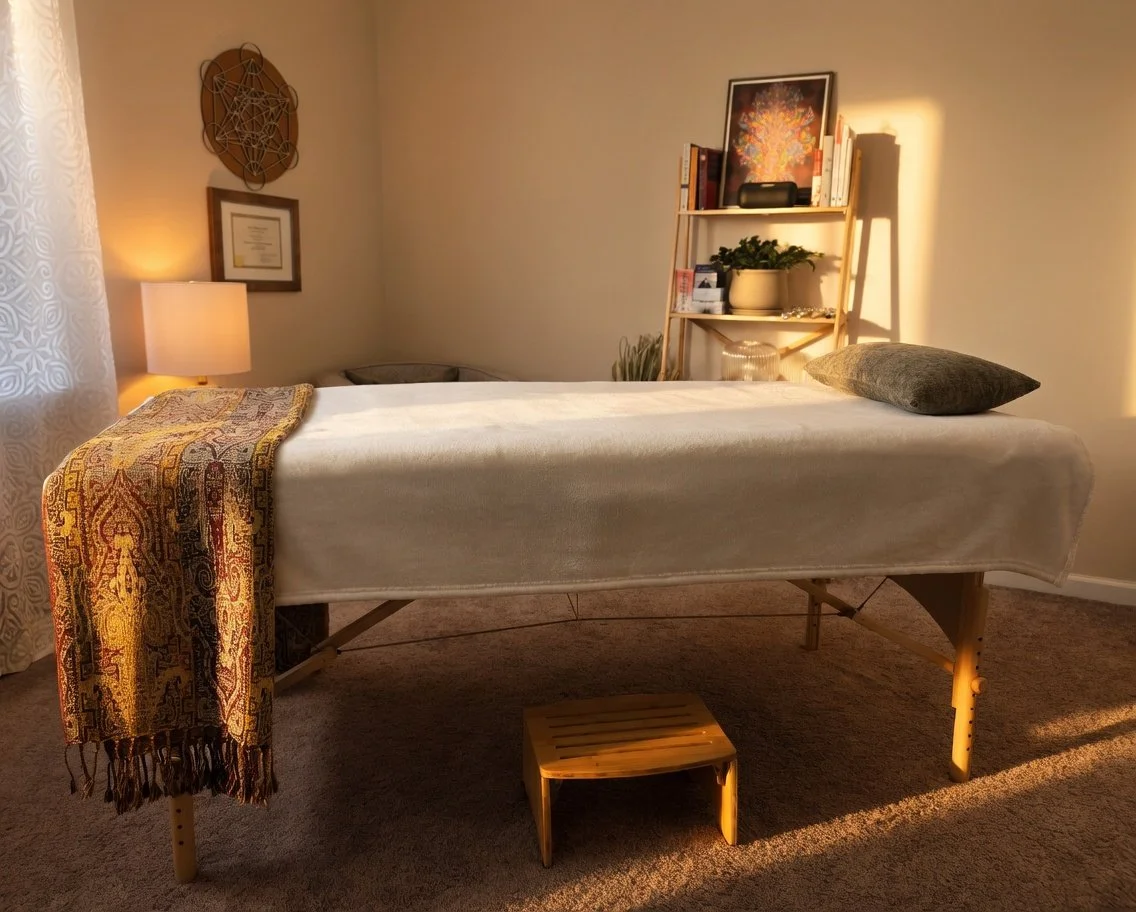
You remain fully clothed and lie comfortably on a treatment table. I place my hands lightly on or just above your body, moving through a series of positions corresponding to the major chakras and organ systems. Sessions are typically 60 minutes of hands-on time.
What you may notice: warmth moving through your body, tingling, a sense of heaviness or lightness, spontaneous emotional release, or simply a depth of stillness that feels unfamiliar. Some people fall asleep. Some feel very little during the session but notice significant shifts in the days that follow — in their sleep, their mood, their pain levels, or their capacity to cope with what was previously overwhelming.
There is nothing you need to do. There is nothing you need to believe. You simply allow.
If this page found you at the right moment, I don't think that’s an accident. I would be honored to work with you.